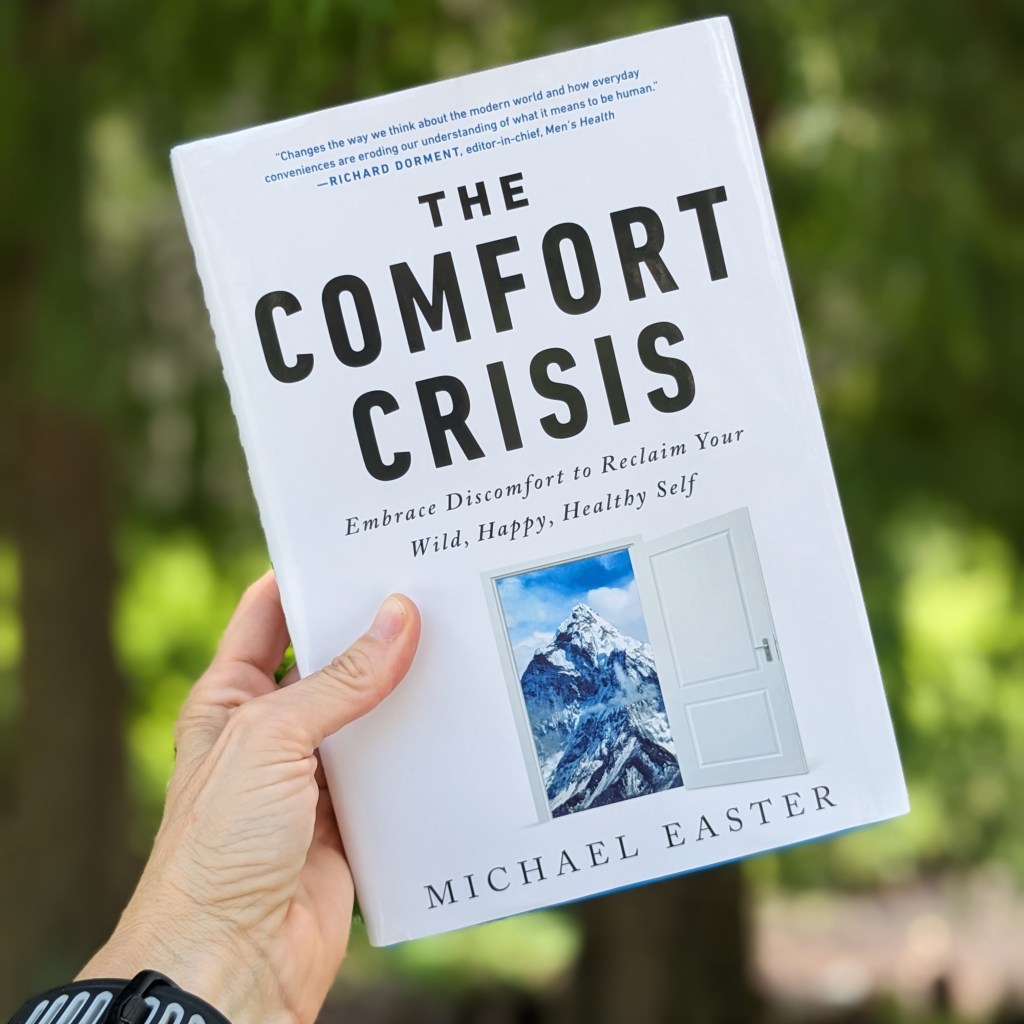
I recently finished reading the book “The Comfort Crisis: Embrace Discomfort To Reclaim Your Wild, Happy, Healthy Self” written by Michael Easter. This book delves into research and the author’s experiences that highlight why seeking out a comfortable life may not be to our advantage. This book grabbed me from the first page and it has completely reshaped my perspective on running and, well, life in general. “The Comfort Crisis” by Michael Easter is a book that not only challenges the status quo but also provides profound insights into how we can optimize our lives by embracing discomfort. Here’s my take on how these lessons can easily be applied to your own running training and routine.
From the very first chapter, “The Comfort Crisis” had me hooked. Michael Easter’s writing style is like a breath of fresh air – friendly, relatable, and backed by solid research. It’s as if he’s having a casual chat with you while dropping science-backed wisdom bombs. As runners, we’re all too familiar with the pursuit of comfort – the cushy shoes, the perfect weather, the well-groomed paths. But Easter shakes things up by suggesting that the real magic happens when we step out of that comfort zone. How could my running improve if I embraced the discomfort instead of shying away from it?
What really hit home for me was the idea of adaptability. Easter talks about how our ancestors were incredible survivors because they had to adapt to ever-changing environments. As runners, this concept is gold. Think about it – every time we step out for a run, we’re dealing with different weather, terrains, and energy levels. How many times have you skipped a run because the conditions weren’t right- too cold, too hot, too rainy? Or maybe you were tired? Or maybe because your watch wasn’t charged? (Guilty.) “The Comfort Crisis” emphasizes that by willingly exposing ourselves to controlled discomfort, we tap into the innate adaptability that makes us better runners and more resilient humans.
Now, let’s talk about the mental aspect. Running is just as much a mental battle as it is a physical one. Easter takes us on a journey of understanding how our modern-day obsession with comfort might actually be holding us back mentally. By seeking out challenges and embracing discomfort, we can train our minds to handle adversity with grace and determination. This translates directly into our running journeys – ever had a tough hill (talking about you, Heartbreak Hill) or a grueling final stretch during a race? “The Comfort Crisis” equips you with the tools to conquer these mental hurdles.
As runners, we sometimes get so focused on goals and personal records that we forget the sheer joy of running. “The Comfort Crisis” encourages us to find joy in the journey – the wind in our hair, the rhythm of our breath, and the feeling of accomplishment after conquering a challenging route. By embracing discomfort, we reconnect with the essence of running – the raw, unfiltered experience that keeps us coming back for more. Easter’s firsthand experiences in the Alaskan wilderness not only make for gripping reading but also provide practical takeaways that we can incorporate into our own routines.
In a world that’s become increasingly comfortable, “The Comfort Crisis” is a refreshing wake-up call. It’s a compelling read that seamlessly blends science, personal anecdotes, and practical advice. Whether you’re a casual jogger or a seasoned marathoner, this book has something for everyone. It’s not a book about running – it’s about redefining your limits, nurturing resilience, and unlocking your full potential. But these lessons can all apply to your running training and take you to the next level. If you’re ready to step out of your comfort zone and discover a whole new dimension to your running journey, I wholeheartedly recommend grabbing a copy of “The Comfort Crisis.” Get ready to challenge your beliefs, push your boundaries, and experience running in a refreshingly invigorating way.
I’m an Amazon Associate, and I may earn from qualifying purchases. The links to “The Comfort Crisis” by Michael Easter are affiliate links, meaning I might earn a commission if you buy through them. This doesn’t change the price for you. Your support through these links is appreciated and helps me provide valuable content. Thank you!
 Trail Jenny
Leave a comment